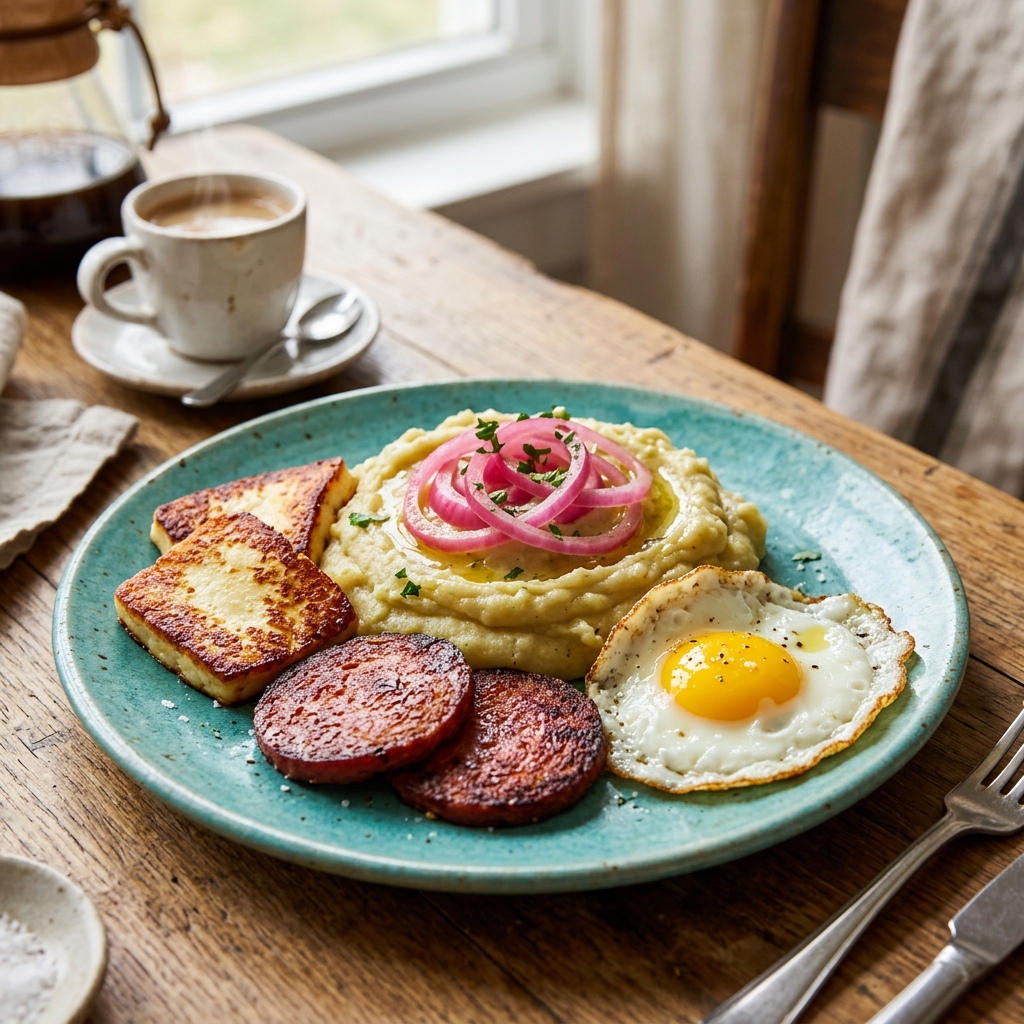
If there is one dish that captures the heart, soul, and irresistible aroma of a Dominican morning, it is Mangú. Considered the national breakfast of the island, Mangú is a comforting, velvety dish made from mashed green plantains. It’s the ultimate comfort food that starts the day off with warmth and energy.
At a Glance
- Prep Time: 15 minutes
- Cook Time: 25 minutes
- Total Time: 40 minutes
- Servings: 4
- Category: Breakfast
- Difficulty: Easy
The History and Cultural Significance
Like many Caribbean dishes, the history of Mangú is a beautiful tapestry woven from African, indigenous Taíno, and Spanish influences. The technique of boiling and mashing starchy root vegetables or plantains traces back directly to West African culinary traditions. It is deeply ingrained in Dominican culture and is eaten year-round, primarily for breakfast, but occasionally for dinner as well.
There is a popular urban legend surrounding the name “Mangú.” During the U.S. military occupation of the Dominican Republic in 1916, American soldiers were reportedly served this mashed plantain dish. Upon tasting it, a soldier allegedly exclaimed, “Man, this is good!” which locals phonetically adapted to “Mangú.” While this makes for a charming story, linguistic historians point out that the word likely derives from West African languages (like the word “mangusi”). Regardless of the origin, Mangú remains a profound symbol of Dominican identity and pride.
Ingredients You Will Need
To make this authentic recipe, gather these ingredients:
- 4 Green Plantains: Make sure they are completely green and firm to the touch. Yellow plantains will make the dish too sweet!
- 2 Tablespoons Butter: Traditional recipes use salted butter or margarine for richness.
- 1 Cup Cold Water: This is the secret ingredient for the perfect texture!
- 1 Large Red Onion: Sliced into thin rings for the classic garnish.
- 1/4 Cup White Vinegar: Used to pickle and soften the red onions.
- 1 Teaspoon Salt: Plus extra for the boiling water.
- 2 Tablespoons Olive Oil: For sautéing the pickled onions.
Step-by-Step Instructions
1. Pickle the Red Onions
Place the sliced red onion rings in a small bowl with the white vinegar and a pinch of salt. Let them marinate for at least 15 to 20 minutes while you prepare the rest of the dish. This turns the onions a bright, beautiful pink and tempers their raw bite.
2. Peel and Boil the Plantains
Cut off both ends of each green plantain. Use the tip of a sharp knife to score the skin lengthwise along the ridges. Carefully wedge your knife or thumb under the skin to peel it off. Cut each peeled plantain in half crosswise, then slice those halves lengthwise to ensure they cook evenly. Place them in a large pot, cover with water, add a generous tablespoon of salt, and bring to a boil. Cook for 20 to 25 minutes, or until a fork easily pierces through them.
3. Cook the Pickled Onions
While the plantains boil, heat the olive oil in a skillet over medium heat. Remove the onions from the vinegar (reserve the vinegar for later) and add them to the skillet. Cook for about 3 to 4 minutes until they are soft and translucent. Pour in the remaining vinegar from the bowl and cook for another minute. Remove from heat and set aside.
4. Mash to Perfection
Once the plantains are tender, remove them from the hot water. Do not discard the boiling water just yet! Place the plantains in a large bowl. Add the butter and begin mashing immediately with a potato masher or a sturdy fork. Gradually splash in the cold water while mashing. If you need more liquid to get a smooth consistency, add a splash of the hot cooking water. Continue mashing until there are no lumps left and the texture is completely smooth and velvety.
5. Assemble and Serve
Spoon the warm Mangú onto plates and top generously with the warm pickled red onions and a drizzle of the onion-infused oil and vinegar.
What to Serve it With (Perfect Pairings)
Mangú is rarely eaten completely alone. It is traditionally served as part of “Los Tres Golpes” (The Three Hits).
- Los Tres Golpes (Fried Salami, Cheese, and Eggs): The ultimate savory complement. The crispy, salty edges of Dominican frying cheese (Queso Frito) and Dominican Salami perfectly balance the soft, starchy plantains. Add a sunny-side-up egg for rich flavor.
- Morir Soñando: Wash this hearty breakfast down with an icy, refreshing glass of this traditional milk and orange juice drink.
- Avocado: Slices of fresh avocado add a beautiful creamy texture and freshness to the plate.
Pro Tips for the Best Mangú
- Use Cold Water: Adding cold water (or even an ice cube) to the warm plantains while mashing stops the starch molecules from seizing up. This ensures your mash remains incredibly light and fluffy instead of dry and rubbery.
- Don’t Wait to Mash: Always mash your plantains while they are piping hot right out of the boiling water. If they cool down before mashing, they will become extremely difficult to break down and will result in lumpy Mangú.


Leave a comment